 This city in northern China is distinct for its cultural and physical proximity to Russia.Having once even been under Soviet control, much of Harbin’s architecture and local culture bears clear Russian influence.But the city is most famous for its magnificent winter attraction: The International Ice and Snow Festival, which is the largest ice festival in the world.Each winter, sculptors in the city build ice models of animals, people and famous landmarks around the world. They light them up with a spectacular light show and parade shivering tourists through these “ice cities.”It’s a stunning display of architectural ingenuity and is unique to this frigid Chinese metropolis. If you can brave the cold, Harbin’s winter festival is one of the most remarkable sights in human engineering found anywhere in the world.
And if you get bored with the sculptures, the festival also contains some other fun activities like winter swimming in the Songhua River.Does a frozen metropolis that seems to rise from the ground sound impossible? Visit the annual Harbin Ice Festival in China to see this spectacle for real. Officially known as the Harbin International Ice and Snow Sculpture Festival, this yearly event sees artists from all over convert blocks of ice into ice-cold skyscrapers, enchanting villages and fairytale castles. If you don’t mind teeth-chattering cold, then you just might encounter some of the most magnificent sights to behold on any tour to China at this event.
The winter wonderland in Harbin has been drawing crowds since the early 1960s when tourists were already raving about its glistening ice lanterns. Today, the festival receives a staggering 700,000 visitors per edition, and with its growing fame, it has made its way to many a list of must-do activities in China. In fact, many travel to China for the spectacle alone. If you are one of them, find out more about the festival below.The starting date of the festival changes every year. However, the two-month-long festival usually starts in late December and lasts until early March. The next edition will start on December 25, 2019. 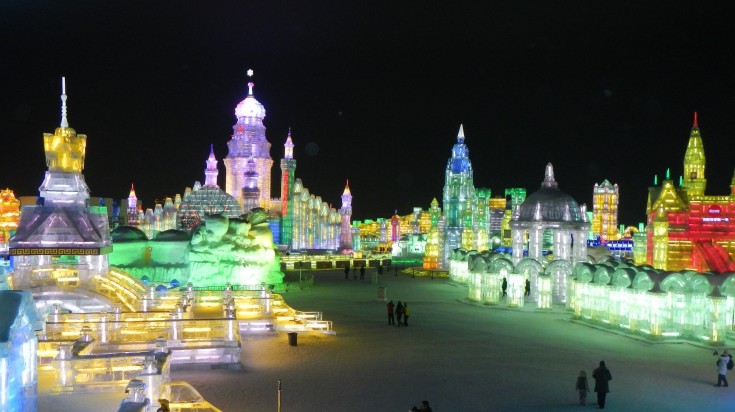 Activities during the Harbin Ice Festival include Yabuli alpine skiing, winter-swimming in the Songhua River and the ice-lantern exhibition in Zhaolin Garden. Photo by Syromaniac [CC by-NC-ND 2.0]Rainbow-colored towers and vivid fantasy castles dominate the skyline at Harbin Ice and Snow World, and are, without a doubt, the pride of this enormous fair. Here, the gigantic blocks of ice, carved with care, create an icy capital that stretches over 750,000 square meters.
Activities during the Harbin Ice Festival include Yabuli alpine skiing, winter-swimming in the Songhua River and the ice-lantern exhibition in Zhaolin Garden. Photo by Syromaniac [CC by-NC-ND 2.0]Rainbow-colored towers and vivid fantasy castles dominate the skyline at Harbin Ice and Snow World, and are, without a doubt, the pride of this enormous fair. Here, the gigantic blocks of ice, carved with care, create an icy capital that stretches over 750,000 square meters.- When to go: During the morning, few visitors will be around and the tickets are more affordable. However, the striking beauty of the illuminated sculptures at night is worth mingling in the crowds for.
- How long to spend: Because of the vastness of this section, it’s recommended to spend at least 3 hours here.
- How to get there: From Harbin Railway Station, you can take a bus on line 103 going to Ha Yi Bai, where you transfer to line 118 bound for Ice and Snow World. The bus rides cost USD 0.30 each way. A taxi ride takes a couple of minutes from the train station and sets you back USD 2.20*.


Comments
Post a Comment